A soft educational introduction for newly diagnosed kids.
Films, books, and care kits that gently introduce a child to what's happening
inside their body — reducing fear and confusion, and helping families feel ready
for the hospital's diabetes education. Delivered through hospital partners.
Type 1 diabetes is one of the most common pediatric chronic conditions worldwide. Today's families are still asked to absorb dense, text-heavy material at the moment a child is least equipped to absorb it. Medical Media is built to bridge that gap — not replace the clinical care, but help the child meet it.
1.7M
Americans living with Type 1 diabetes today.
130K / yr
Children newly diagnosed each year worldwide.
18K / yr
Children newly diagnosed each year in the U.S.
6–12
Most common diagnosis age range.
24
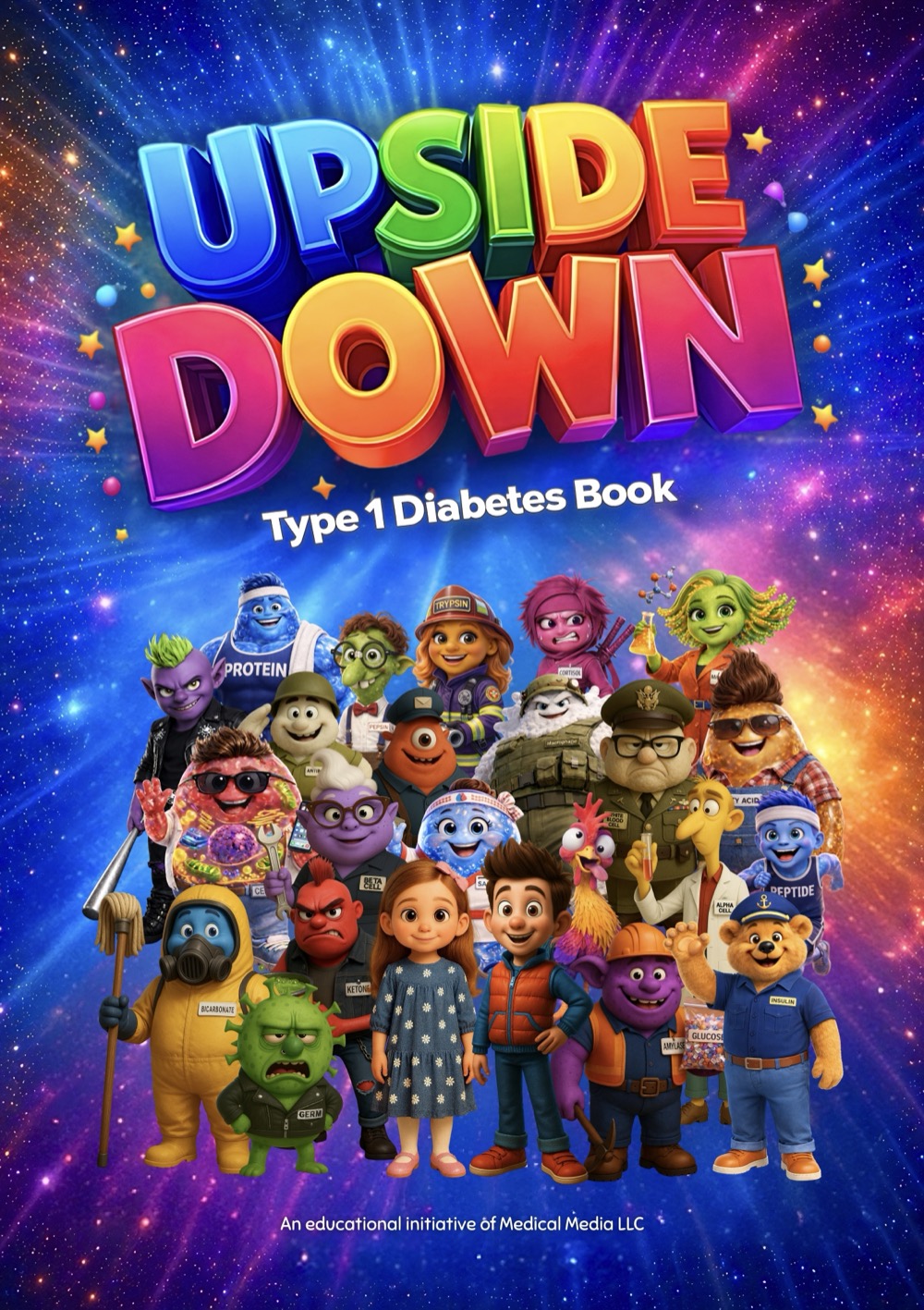
Founding cast members in the Upside Down ensemble.
4
Languages we ship in today, with eight more by '27.
What's missing today
A child-friendly first step before the clinical deep dive.
Hospitals do the medical education well — diagnosis-day care plans, dosing, carb counting. What's missing is the piece that comes before any of that lands: an emotional and visual introduction the child can actually follow, so they walk into the clinical session already knowing who's in their body and what's happening.
Materials handed to families are still dense and text-heavy, not built for how a six-year-old learns.
A child's first impression of their new lifestyle often arrives through clinical curriculum, not story.
Existing companion plushes are comforting, but the educational layer mostly stops there.
There is rarely a localized version — same English text whether you're in Boston, Mexico City, or Tel Aviv.
Few materials connect to the child's actual day — phone, juice, insulin pen, classroom, school nurse.
Parents are left translating clinical curriculum into a story their child can follow at home.
From a parent
"At a time when we just needed something kid-friendly, my 8-year-old couldn't stay engaged through the lecture itself. I kept wishing someone had made this for her — in her language."
Parent of a newly diagnosed child · age 8
Where it fits
A soft introduction, timed for the calm moment.
Medical Media is not a replacement for diabetes educators, discharge training, or the hospital's clinical curriculum. It's the gentle, age-appropriate introduction that comes before all of that — so a frightened child meets the diagnosis through story and characters first, and is ready to understand the formal training when it begins.
Diagnosis
A child arrives at the hospital — often through DKA, a high reading found elsewhere, or routine testing. They may be too sick to eat, drink, or take much in. Parents are frightened and overwhelmed.
Stabilization
Once the child is medically stable — talking, eating, drinking, up and moving — a calmer window opens. This is the moment an introduction can actually land.
Watch the film
The child watches the animated film. It explains, visually and gently, what insulin is, why it's needed, and what happened inside their body — and that they're going to be okay, and they're not alone.
Open the care package
The book, Insy the Insulin Bear, and the rest of the kit arrive — and the characters are already familiar. "That's Insy — I know him!" The plush has meaning; the book has context.
Formal diabetes education
With fear lowered and the basics introduced, the family begins the hospital's comprehensive diabetes training — dosing, carb-counting, discharge. We help make that education easier to absorb.
Our role is the first two steps of understanding before instruction — emotional support through storytelling that prepares families for comprehensive diabetes training, never replaces it.
The program
The pieces of the Medical Media program.
A licensable program distributed by your endocrinology team alongside the clinical curriculum — ideally during the calm window before discharge, so the child meets the story before the formal session begins. Families and hospitals choose one of three tiers, and every tier includes the animated film and the hardcover book — the film unlocked by a unique QR code printed inside each book.
The film
An animated short that explains the endocrine system through characters that personify insulin, glucose, and the pancreas. The model is Inside Out, not a teddy bear with diabetes. Five-minute proof of concept live; targeting a 20–30 minute program, then a feature-length release with a major studio partner.
5 min today · 30 min Q3 · 90 min '27
The book
Hardcover companion to the film, illustrated with the same character cast. Walks a parent and child through what insulin does, what glucose does, why blood sugar moves, and what every device in the kit is for — at a third-grade reading level.
A unique QR code inside every book unlocks the film — scan, register, and watch. It ties the book, movie, characters, and plush together into one story.
Hardcover · 48 pages · ages 5–10 · QR film access
The game
iOS / iPadOS companion app where Insy the Insulin Bear leads check-ins, charts daily streaks, and turns CGM readings into the language of the show. Built to hold a kid's attention on the car ride home — and again six months later.
iOS · ages 5–12 · COPPA-aligned
The backpack
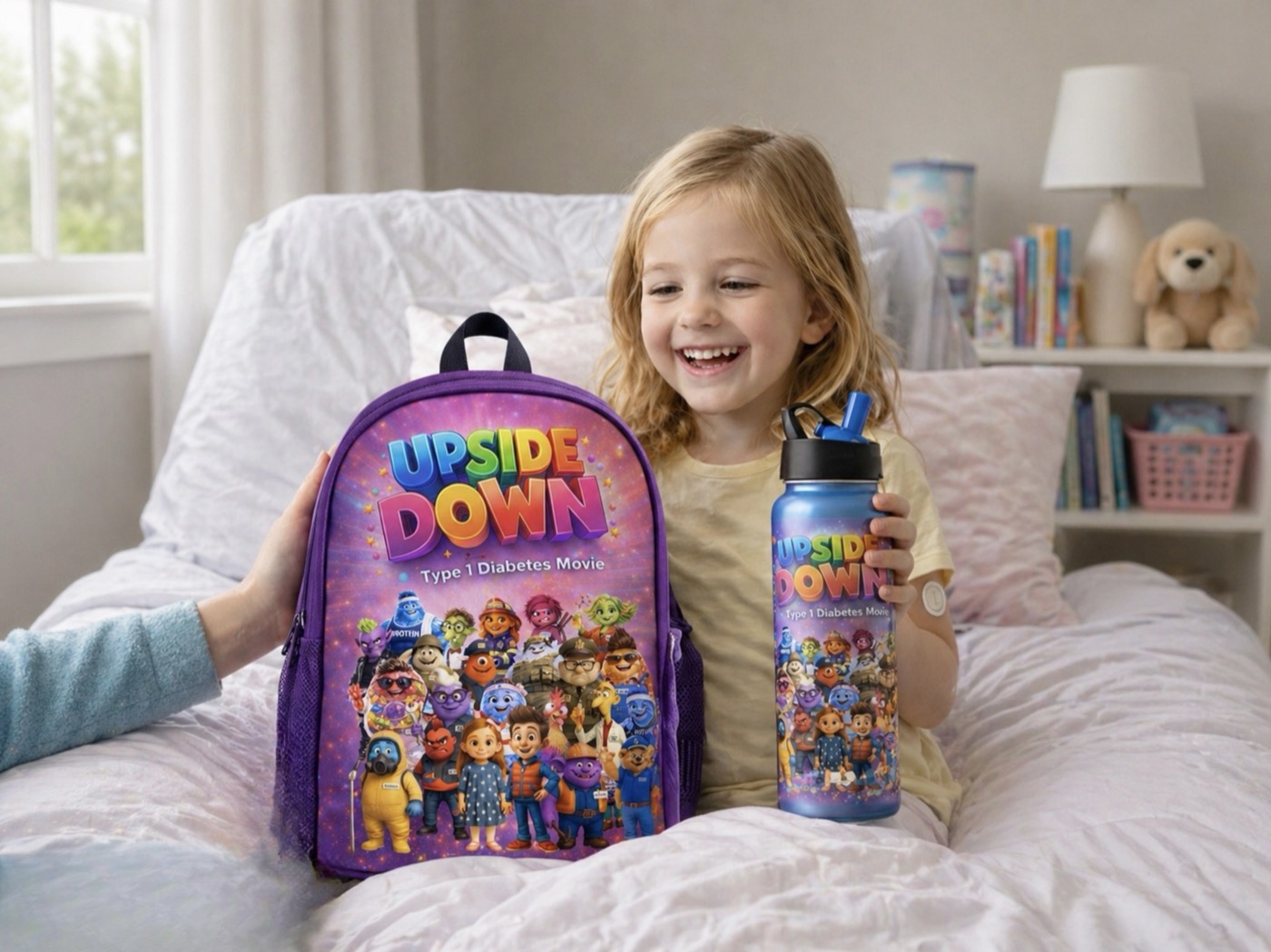
The single thing every newly diagnosed child carries to school for the rest of their life. Holds the book, the plush, juice, an insulin pen, a phone, and a CGM kit. Cover features the show's full character cast.
Recycled poly · 14L · 5–12 yr
The plush
Insy the Insulin Bear. Soft golden coat, navy uniform with anchor cap, "INSULIN" name tag — the deuteragonist who shows up in the film, the book, and the game. Embroidered name tag, washable, sized to fit in the backpack.
12" · embroidered · machine wash
The carry items
Branded water bottle, fanny pack sized for a phone and an insulin pen, juice / glucose-tab pouch. The everyday things a child with Type 1 has to carry — turned into something they actually want to be seen with at school.
600ml bottle · 3-pocket pack · pouch
The Complete Care Package in use — backpack and water bottle featuring the Upside Down cast.
The characters
The cast is the child's body.
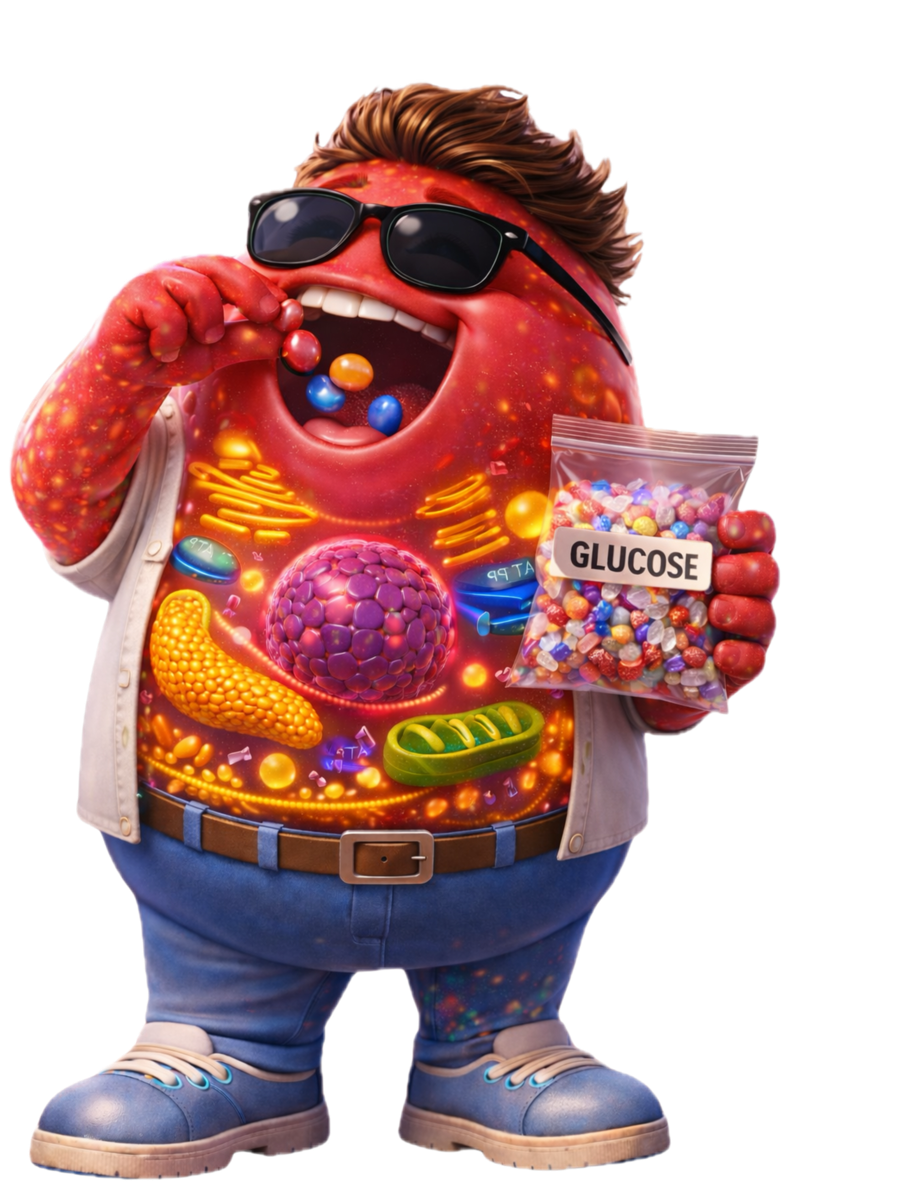
Other programs give kids a teddy bear that also has diabetes. We give them a cast of characters that are their endocrine system — Insy the Insulin Bear, Glucose, the Beta Cell, the Macrophage, Cortisol, Trypsin, and the rest. The same model that made Inside Out work for emotions is the model we use for biology.
Selected cast
Twenty-four characters in the founding ensemble.
Each character represents an actual actor in the body's response to food, illness, insulin, and stress. Insy the Insulin Bear leads the cast — the captain of insulin delivery — alongside Glucose, the Beta Cell, and the rest of the ensemble. Developed alongside pediatric endocrinologists so the metaphor maps cleanly to the underlying biology.
InsyInsulin · the helper
GlucoseBlood sugar
Beta CellPancreas · insulin source
MacrophageImmune · the protector
CortisolStress hormone
White Blood CellImmune · the general
PeptideProtein messenger
TrypsinDigestion · firefighter
Why it lands
Three reasons the story lands where text alone can't.
We are not the first organization to ship educational material to newly diagnosed kids, and we don't replace the clinical materials that follow. We are the first to design the introduction the way an entertainment studio would, with a clinical board.
01 — Engagement
Built like the films kids ask to rewatch.
Existing materials lose a child's attention the moment the hospital visit ends. We design with the same care that goes into the animated films kids actually ask to see again — short, character-led, emotionally clear. The book has a cliffhanger. The plush is real.
If a child won't ask to watch it again, we haven't succeeded.
02 — Mechanism
The cast is the body, not the patient.
Other companion plushes are warm and comforting — and many can teach the basics of insulin placement. Our characters add the layer underneath that: they personify what is happening inside the child — Insy the Insulin Bear doing his job, Glucose moving through the bloodstream, the Beta Cell that needs help.
The result is a real mental model of the disease, alongside the emotional company.
03 — Customization
Localized, hospital-branded, child-specific.
Every licensed edition ships in the family's language, optionally with an avatar that resembles the child, and with the sponsoring hospital's actual building featured in the closing scene as the character walks out healthy.
It does not feel like a generic resource. It feels like it was made for that family, by that hospital.
Customization
Three things the program adapts to before it ships.
Language
Film audio, book text, and game UI translated and re-recorded — not subtitled. Insy is voiced natively in every locale.
EnglishEspañolעברית中文+8 in '27
Avatar
Skin tone, hair, glasses, hijab, hearing aid — the protagonist visibly resembles the child. We pre-render variants and select the closest match from the diagnosis intake form.
Hospital
The sponsoring hospital's actual building appears in the closing scene as the character walks out healthy. Already produced for a U.S. children's hospital and Hadassah/Karim in Israel.
For hospital partners
How a license becomes a kit on a child's bed.
Four steps from procurement signature to kits arriving at your endocrinology floor. Most pilots run twelve weeks end-to-end.
Pick a tier
Book + film, book + film + plush, or the complete care package — every tier includes the film. Annual or per-patient licensing; most partners start per-patient and convert to annual after the first quarter.
Customize
Send your logo, exterior building photo, language list, and a one-line endorsement from your clinical lead. We integrate everything into a branded edition.
We ship
Customized units arrive within four weeks of sign-off. Includes a clinician onboarding sheet so your team knows what's in each kit before the family does.
You distribute
Your team hands a kit to every newly diagnosed family during the calm window before formal training — a soft introduction that prepares them for your diabetes education, not a replacement for it.
Roadmap
Type 1 first. Then every condition a kid can be handed.
Each new disease is its own production — different characters, different clinical board, same workflow and brand. The pipeline is the asset.
Live · 2026
Type 1 diabetes
Full program: 5-min film live, longer cuts in production, full care package shipping. English + Spanish + Hebrew live; Mandarin in localization.
Two hospital pilots underway
24-character founding cast
Studio talks for feature-length
Next project
Pediatric cancer
The most likely next production — a life-altering diagnosis with an enormous need for child-friendly understanding, and the same emotional weight as a Type 1 diagnosis. Same model: movie → characters → book → plush → care package → hospital distribution.
Distinct cast — different biology
Same care-package format and tiers
Pediatric-oncology advisory board to form
The platform
Serious pediatric diagnoses
A platform for the diagnoses that change a childhood — cystic fibrosis, sickle cell disease, and other chronic childhood illnesses — each with its own story, characters, and care package on the same storytelling and distribution model.
One studio, many conditions
Cross-condition story universe
Studio partner discussions
In the field
What the people using it actually say.
Endocrinologist quote pending — we're collecting feedback from clinicians on the active pilots and will publish a real, attributed quote here.
Teaching hospitals on the clinical advisory board.
2
Custom hospital editions already in production (US + Israel).
94%
Of pilot families said it helped their child understand the diagnosis before formal training began.
6 mo
Average time a child still asks to see the film, post-diagnosis.
Send a care package
Sponsor a child's diagnosis-day kit.
Each tier funds a piece of the package that goes home with a newly diagnosed child through one of our hospital partners. You can dedicate a kit in a child's name, or sponsor anonymously. Medical Media is registering a 501(c)(3) affiliate so contributions can become tax-deductible — until then, every dollar goes directly to manufacturing and shipping.
Want to sponsor at a larger scale, set up a recurring contribution, or dedicate a kit in someone's name? Email us — we'll write back the same business day.
For hospital partners
Bring the program to your endocrinology team.
If you're a clinician, administrator, or hospital partner, we'll set up a 30-minute walkthrough — show your team the film, walk through the carry kit, and quote a tier in writing within one business day. We handle the customization and clinical onboarding before anything ships.